


Don Johnson's Hayward Motors Chrysler Dodge Jeep Ram - Jeep Cherokee vs Jeep Compass: Which 4x4 SUV Fits Hayward, WI Driving?
If you are shopping for a new Jeep SUV in Hayward, WI, two names probably rise to the top quickly: Jeep Cherokee and Jeep Compass. Both bring confident Jeep Brand capability, both offer 4x4 traction for northern Wisconsin roads, and both are practical enough for weekday errands, lake weekends, cabin access, and longer drives across Sawyer County. The real question is not which one is better overall - it is which one fits your daily life better.
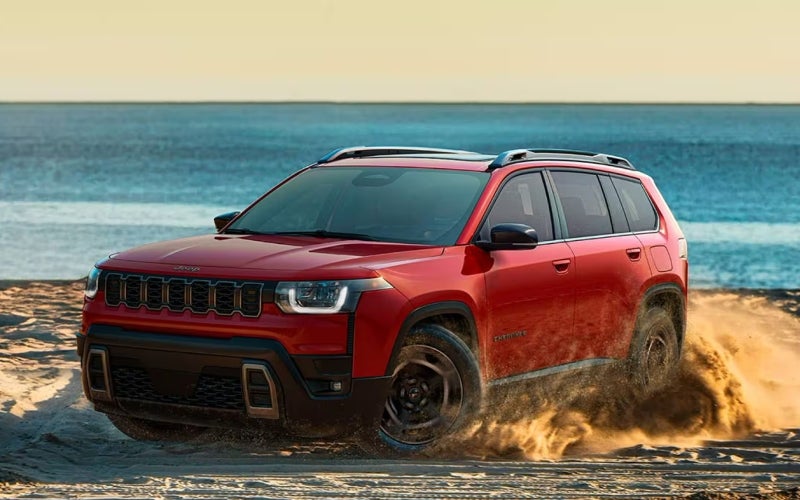
At Don Johnson's Hayward Motors Chrysler Dodge Jeep Ram, we talk with drivers who need one vehicle to do a lot. A Hayward SUV may need to handle the school run, parking downtown, groceries off US Highway 63, gravel roads near the Chippewa Flowage, gear for fishing or biking, and longer routes toward Ashland, Superior, Rice Lake, or Duluth. That is where the Cherokee and Compass separate themselves. The Cherokee is the roomier, stronger-towing, no-plug turbo hybrid SUV. The Compass is the more compact, maneuverable, trail-capable choice with impressive standard power and everyday efficiency.
Here is a practical local comparison to help you decide which Jeep SUV makes the most sense for your garage, driveway, travel habits, and weekend plans around Hayward.
Start with the Big Difference: Size and Everyday Use
The Jeep Compass is the smaller of the two, which makes it easy to live with if you value simple parking, tight turning, and a right-sized footprint. With an exterior length of 173.4 inches, the Compass feels well suited for everyday driving around Hayward, especially if your routine includes quick stops, residential streets, smaller parking lots, or narrow cabin lanes. Inside, it still gives you five-passenger seating and up to 59.8 cubic feet of cargo space with the rear seats folded, so it is far from small when it is time to load bags, pet supplies, outdoor gear, or hardware store finds.
The Jeep Cherokee steps up in size and interior flexibility. With a longer body, 107 cubic feet of passenger volume, 33.6 cubic feet of cargo room behind the second row, and up to 68.3 cubic feet with the second-row seats folded, the Cherokee is the better fit if you regularly carry passengers and gear at the same time. For families, outdoor hobbyists, or anyone who wants extra room without moving all the way into a larger SUV, the Cherokee hits a smart middle ground.
Powertrains: Turbo Hybrid Range vs Turbo Gas Simplicity
The Cherokee Turbo Hybrid stands out because it gives you hybrid efficiency without needing to plug in. Its 1.6L I4 Turbo Hybrid system uses regenerative braking to help support the electric motors, and Jeep lists up to 37 combined MPG and more than 500 miles of total driving range on a single tank. For Hayward drivers who cover longer distances, travel between towns, or simply want fewer fuel stops, that is a major advantage. It also delivers 210 maximum horsepower and 230 maximum pound-feet of torque, giving it confident power for highway passing, rolling terrain, and daily driving.
The Compass uses a 2.0L Turbo engine with 200 horsepower and 221 pound-feet of torque, which Jeep identifies as Best-in-Class standard horsepower and torque. It is a lively setup for a compact SUV, and its 8-speed automatic transmission helps it feel responsive in daily use. With fuel economy ratings of 23 city, 31 highway, and 26 combined MPG, the Compass remains efficient while keeping traditional gas-engine operation simple.
4x4 Confidence for Hayward Roads and Cabin Access
Both SUVs are excellent choices if you want all-weather confidence, but the way each model approaches capability is slightly different. The Cherokee comes equipped with Jeep Active Drive I 4x4 across its trims, giving every Cherokee driver the sure-footed traction expected from a Jeep SUV. It also offers up to 20 inches of water-fording capability when properly driven in appropriate conditions, and its 3,500-pound towing capacity gives it extra versatility for small trailers and recreational gear.
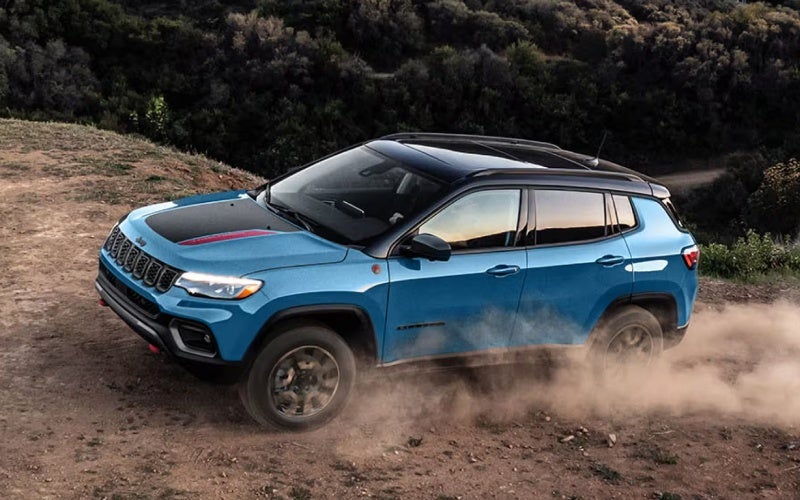
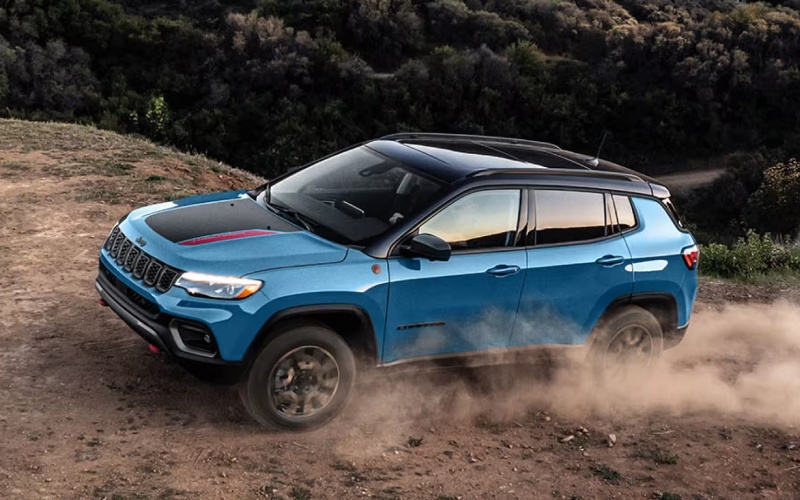
The Compass also comes standard with Jeep Active Drive 4x4, and Trailhawk models add Jeep Active Drive Low 4x4 with a 20:1 crawl ratio, the Selec-Terrain Traction Management System with Rock Mode, Hill Descent Control, and Falken WildPeak all-terrain tires. If your idea of a Jeep SUV includes unpaved access roads, uneven terrain, and a more rugged personality in a compact package, the Compass Trailhawk is especially appealing.
- Choose Cherokee for: More cargo space, hybrid efficiency, longer total driving range, and stronger towing capability.
- Choose Compass for: Easier maneuverability, compact SUV convenience, standard turbo power, and available Trailhawk off-road hardware.
- Choose Cherokee for: Families or drivers who frequently carry passengers, coolers, luggage, and outdoor gear together.
- Choose Compass for: Commuters, first-time Jeep SUV shoppers, or drivers who want capability without a larger footprint.
Towing and Gear: Which SUV Handles Your Toys?
If towing is a serious part of your decision, the Cherokee has the advantage. Its maximum towing capacity of 3,500 pounds is useful for small campers, lightweight utility trailers, personal watercraft, and certain boat setups when properly equipped. Around Hayward, where many weekends revolve around lakes, trails, home projects, and outdoor equipment, that extra towing headroom can matter.
The Compass can tow up to 2,000 pounds, which is still useful for smaller trailers, compact recreational gear, or a modest utility setup. If your towing needs are occasional and light, the Compass may be plenty. If you expect to tow more often or want additional margin, the Cherokee is the easier recommendation.
Technology and Safety: Both Feel Modern, Cherokee Adds Extra Depth
The Cherokee brings a larger 12.3-inch touchscreen, a 10.25-inch Digital Cluster Display, wireless Apple CarPlay and Android Auto compatibility, and available features like a wireless charging pad, Digital Rearview Mirror, and 360-degree Surround View Camera. Jeep also notes more than 140 standard and available safety and security features, including Active Driving Assist, Full-Speed Forward Collision Warning with Active Braking, Blind Spot Monitoring with Rear Cross Path Detection, Active Lane Management, Adaptive Cruise Control with Stop and Go, and Drowsy Driver Detection.
The Compass also delivers a strong technology package, including the Uconnect 5 system, an available 10.1-inch touchscreen, wireless Apple CarPlay and Android Auto compatibility, available Active Driving Assist, and safety features such as Drowsy Driver Detection. For many shoppers, Compass technology will feel more than complete. Cherokee simply adds more screen space and a broader suite of available premium driver-assistance features.
Which Jeep SUV Should You Test Drive First?
If your life around Hayward includes frequent road trips, family gear, boat launches, and longer drives through northern Wisconsin, start with the Jeep Cherokee. Its no-plug turbo hybrid system, generous cargo capacity, standard 4x4, and stronger towing rating make it a versatile SUV for drivers who want capability and efficiency in one package.
If you want a compact SUV that feels easy to drive every day while still offering true Jeep character, start with the Jeep Compass. It is practical, confident, and especially compelling in Trailhawk form for drivers who want extra trail-ready equipment without stepping into a larger vehicle.
Our team at Don Johnson's Hayward Motors Chrysler Dodge Jeep Ram can help you compare trims, seating comfort, cargo space, technology, and finance options side by side. We also offer tools to value your trade, explore buying power, apply for financing, and even order a vehicle with the trim, packages, color, engine type, and accessories that fit your plans.
Frequently Asked Questions:
Is the Jeep Cherokee bigger than the Jeep Compass?
Yes. The Cherokee is longer and offers more passenger and cargo volume. It provides up to 68.3 cubic feet of cargo space with the second-row seats folded, while the Compass offers up to 59.8 cubic feet.
Does the Jeep Cherokee Turbo Hybrid need to be plugged in?
No. The Cherokee Turbo Hybrid does not need plug-in charging. It uses regenerative braking to help generate electricity for its hybrid system.
Which tows more, the Jeep Cherokee or Jeep Compass?
The Cherokee can tow up to 3,500 pounds when properly equipped. The Compass can tow up to 2,000 pounds, making Cherokee the stronger choice for shoppers with more frequent or heavier towing needs.
Which is better for cabin roads around Hayward, WI?
Both offer 4x4 confidence. The Compass Trailhawk is a strong choice for more rugged compact-SUV capability, while the Cherokee adds more space, range, and towing strength for mixed daily and adventure use.
Can Don Johnson's Hayward Motors help me compare both models?
Yes. We can walk you through features, trims, trade-in options, financing, and service support so you can choose the Jeep SUV that fits your Hayward-area lifestyle.